

Why use natural cleansers: gentle, eco-friendly skincare
Your cleanser might be doing more harm than you realize. Many women assume all cleansers work the same, but harsh synthetic ingredients can strip your skin’s natural oils, disrupt its protective barrier, and introduce harmful chemicals into waterways. Natural cleansers offer a gentler, more sustainable approach that respects both your skin and the planet. This article explores the science behind natural cleansing, compares safety and environmental data, and guides you toward smarter skincare choices that align with your health and values.
Table of Contents
- How Natural Cleansers Gently Protect Your Skin
- Comparing Safety And Environmental Impact Of Natural Versus Synthetic Cleansers
- Understanding The Nuances: Limitations And Considerations When Choosing Natural Cleansers
- Choosing And Applying Natural Cleansers For Best Results
- Explore Natural Skincare Products Designed For Your Skin
- FAQ
Key takeaways
| Point | Details |
|---|---|
| Gentle cleansing action | Natural cleansers use plant-based surfactants that clean effectively without stripping essential oils or disrupting skin pH. |
| Better pH balance | They maintain skin’s natural pH around 5.5, reducing irritation and supporting barrier health better than synthetic options. |
| Environmental benefits | Biodegradable formulas and cruelty-free practices minimize aquatic toxicity and ecological footprint. |
| Smart selection matters | Choose pH-balanced, evidence-based natural formulas to maximize benefits and avoid potential sensitivities. |
| Practical considerations | Some natural cleansers have shorter shelf life and require patch testing for essential oil sensitivities. |
How natural cleansers gently protect your skin
Your skin’s protective barrier is delicate, and the wrong cleanser can compromise it within days. Natural cleansers work differently than their synthetic counterparts by using plant-based surfactants like saponins and fatty acid salts that lift dirt and oil without aggressive stripping. These gentle compounds respect your skin’s natural architecture, preserving the lipid layer that keeps moisture in and irritants out.
Skin health depends heavily on pH balance. Your skin naturally maintains a slightly acidic pH around 5.5, which supports beneficial bacteria and enzyme function. Harsh sulfates found in many synthetic cleansers push pH toward alkaline levels, triggering dryness, redness, and inflammation. Natural cleansers maintain this crucial balance, allowing your skin to function optimally without constant recovery from chemical assault.
The difference becomes obvious when you compare ingredient lists. Synthetic cleansers often contain sodium lauryl sulfate (SLS) or sodium laureth sulfate (SLES), powerful detergents that create satisfying foam but damage the skin barrier by dissolving protective lipids. Your sensitive skin oil to milk cleanser demonstrates how effective cleansing can happen without these harsh agents.
Benefits of plant-based surfactants:
- Preserve natural moisture levels by avoiding lipid disruption
- Support skin barrier integrity through gentle molecular interaction
- Reduce inflammation and sensitivity common with synthetic detergents
- Maintain optimal pH for healthy microbiome function
Pro Tip: If your skin feels tight or dry after cleansing, your cleanser is too harsh. Natural options like natural cleansing foam should leave skin feeling clean but comfortable, never stripped or squeaky.
“The skin barrier is your first defense against environmental stressors. Protecting it starts with choosing cleansers that work with your skin’s biology, not against it.”
Your cleanser sets the foundation for everything else in your skincare routine. When you start with a gentle, pH-balanced natural formula, serums and moisturizers absorb better and work more effectively. You’re not just cleaning your skin; you’re creating optimal conditions for health and radiance.
Comparing safety and environmental impact of natural versus synthetic cleansers
The numbers tell a compelling story about cleanser safety. Research comparing natural and synthetic soaps reveals that natural formulations show significantly lower toxicity to human skin cells, with IC50 values of 7.56 to 7.82 mM compared to just 0.604 mM for SLS. This means natural cleansers require concentrations more than 12 times higher to cause the same cellular damage as synthetic alternatives.
Beyond direct skin effects, environmental impact separates natural from synthetic cleansers dramatically. When you rinse your face, those ingredients flow into water systems. Natural cleansers biodegrade rapidly, breaking down into harmless compounds that aquatic organisms can process. Synthetic detergents persist in water, accumulating in ecosystems and harming fish, algae, and microorganisms that form the foundation of aquatic food chains.

| Factor | Natural Cleansers | Synthetic Cleansers |
|---|---|---|
| Cell toxicity (IC50) | 7.56-7.82 mM | 0.604 mM |
| Biodegradability | High, rapid breakdown | Low, persistent compounds |
| Aquatic impact | Minimal toxicity | Significant harm to organisms |
| Clinical efficacy | Excellent with gentleness | Effective but harsh |
| Skin barrier preservation | Strong support | Often compromised |
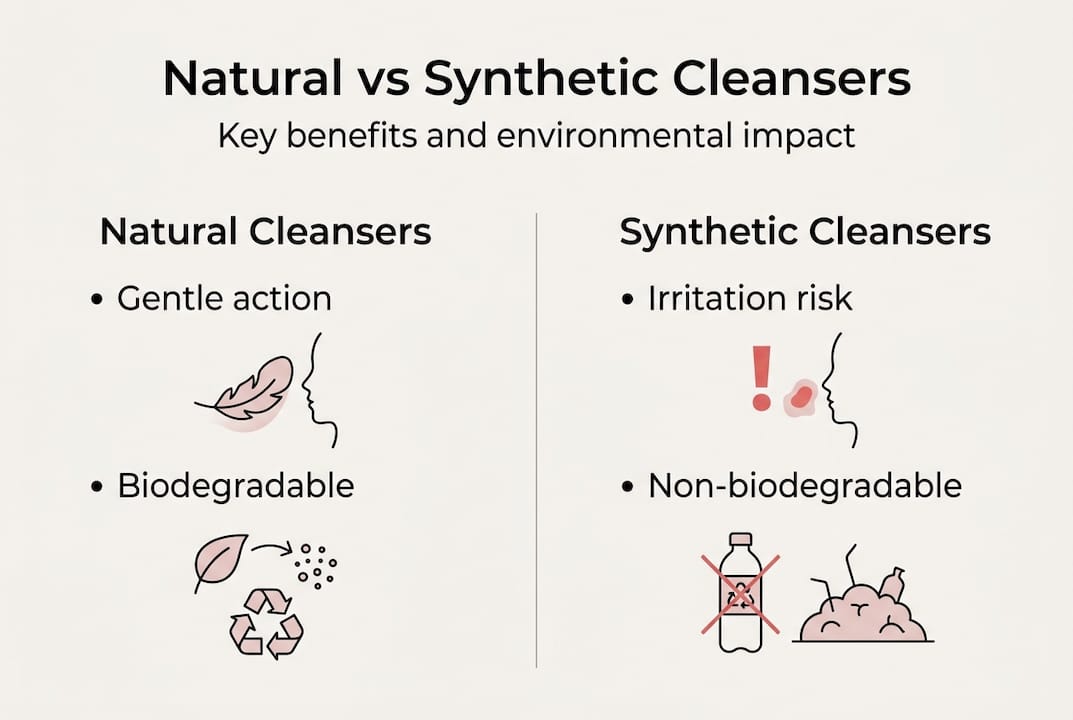
Clinical studies confirm what laboratory data suggests. Participants using natural cleansers report better skin tolerance, fewer adverse reactions, and improved hydration compared to synthetic options. The efficacy isn’t sacrificed for gentleness. Natural formulations clean just as effectively while causing less collateral damage to your skin’s protective systems.
The environmental mathematics matter for conscious consumers. Every time you choose a natural cleanser, you reduce the chemical load entering waterways. Multiply that choice across millions of daily face-washing routines, and the cumulative impact becomes substantial. Your organic skincare routine benefits extend far beyond your bathroom mirror.
Key safety advantages of natural cleansers:
- 12x lower cellular toxicity compared to common synthetic surfactants
- Rapid biodegradation minimizes environmental persistence
- Reduced allergen and irritant exposure for sensitive individuals
- Lower risk of long-term skin barrier dysfunction
These aren’t marginal differences. The gap between natural and synthetic cleansers represents a fundamental choice about what you expose your skin and environment to daily. When formulations contain at least 95% natural components and avoid parabens, sulfates, and synthetic fragrances, you eliminate entire categories of potential harm while maintaining cleansing effectiveness.
Understanding the nuances: limitations and considerations when choosing natural cleansers
Honesty matters when discussing natural skincare. While natural cleansers offer significant advantages, they’re not perfect solutions for every situation. Even natural soaps can temporarily raise skin pH, and some individuals experience sensitivity to botanical extracts or essential oils that cause no issues for most users.
Essential oils deserve particular attention. These concentrated plant compounds provide fragrance and some therapeutic benefits, but they can trigger contact dermatitis in sensitive individuals. Lavender, tea tree, and citrus oils are common culprits. If you have reactive skin, choose fragrance-free natural formulas or those using minimal, well-tolerated botanical extracts.
Shelf life presents another practical consideration. Natural preservatives like vitamin E, rosemary extract, and grapefruit seed extract work well but don’t match the multi-year stability of synthetic preservatives like parabens. Your natural cleanser might last 12 to 18 months instead of three years. This isn’t necessarily a drawback. Fresher formulations can mean more potent active ingredients, and you’ll likely use a cleanser within a year anyway.
Situations where caution or alternatives may be needed:
- Very sensitive skin may react to essential oils or botanical extracts
- Extremely oily or acne-prone skin might need stronger active ingredients temporarily
- Travel or storage in hot conditions can reduce natural formula stability
- Specific skin conditions may require dermatologist-prescribed synthetic formulations
Pro Tip: Always patch test new natural cleansers on your inner forearm for 24 hours before using on your face. Even gentle, natural ingredients can cause reactions in individuals with specific sensitivities.
The pH fluctuation issue deserves context. Yes, some natural bar soaps can raise skin pH temporarily, but your skin’s natural buffering systems typically restore balance within 30 to 60 minutes. This temporary shift is less damaging than the prolonged barrier disruption caused by harsh sulfates. Choosing pH-balanced natural formulas minimizes even this minor concern.
Synthetic cleansers do offer advantages in specific contexts. They provide greater stability, longer shelf life, and sometimes more potent active delivery for targeted treatments. If you’re dealing with severe acne or specific dermatological conditions, a dermatologist-prescribed synthetic formula might be appropriate temporarily. The goal isn’t dogmatic avoidance of all synthetics but informed choices that prioritize gentleness and sustainability when possible.
Your 5-minute skincare routine should include products you trust and that work for your individual needs. Natural cleansers work beautifully for most people, but understanding limitations helps you make decisions aligned with your specific skin situation and lifestyle requirements.
Choosing and applying natural cleansers for best results
Smart selection starts with understanding surfactant types. Look for amino acid surfactants like sodium cocoyl apple amino acids, which cleanse effectively while supporting skin barrier function and hydration. These compounds bridge the gap between cleaning power and gentleness, making them ideal for daily use on all skin types.
Format matters more than you might expect. Natural cleansers come in lotion, gel, foam, and bar forms, each with distinct advantages. Lotion cleansers work beautifully for dry or mature skin, providing extra moisture during cleansing. Gels suit oily or combination skin with lighter texture and deeper pore cleansing. Foaming formulas offer satisfying sensory experience while maintaining gentleness. Bars are eco-friendly and travel-friendly but may be more alkaline.
| Cleanser Format | Best For | Key Benefits | Considerations |
|---|---|---|---|
| Lotion/Cream | Dry, mature, sensitive skin | Extra hydration, gentle removal | May need second cleanse for heavy makeup |
| Gel | Oily, combination skin | Deep pore cleansing, light texture | Can be drying if not pH-balanced |
| Foam | All skin types | Easy application, thorough cleansing | Check for gentle surfactants |
| Bar | Normal skin, eco-conscious users | Minimal packaging, travel-friendly | May have higher pH |
Application technique influences results as much as product choice. Follow these steps for optimal cleansing:
- Start with lukewarm water to open pores without shocking skin
- Apply cleanser to damp skin using gentle circular motions for 30 to 60 seconds
- Focus on oil-prone areas like T-zone but don’t neglect drier areas
- Rinse thoroughly with lukewarm water, ensuring no residue remains
- Pat dry with a clean towel, leaving skin slightly damp for better serum absorption
- Follow immediately with toner and moisturizer to lock in hydration
Certifications provide valuable guidance when selecting products. Look for cruelty-free certifications from organizations like Leaping Bunny or PETA, organic certifications like USDA Organic or COSMOS, and eco-labels indicating sustainable sourcing. These third-party verifications confirm that brands meet rigorous standards beyond marketing claims.
Your sensitive skin oil to milk cleanser exemplifies evidence-based formulation. It combines gentle plant oils that emulsify makeup and impurities with milk proteins that nourish and soothe. The transformation from oil to milk texture provides thorough cleansing without the harsh stripping common in synthetic options.
For those dealing with specific concerns like excess oil or congestion, a purifying mousse offers targeted benefits while maintaining natural ingredient integrity. The key is matching cleanser properties to your skin’s current needs, which may shift seasonally or with hormonal changes.
Pro Tip: Double cleansing with natural products works beautifully for removing makeup and sunscreen. Use an oil-based cleanser first to dissolve makeup, then follow with a gentle foaming or gel cleanser to remove any remaining residue and refresh skin.
Evidence-based formulations distinguish quality natural cleansers from greenwashed products. Look for brands that cite research, provide ingredient sourcing information, and explain why specific botanicals were chosen. Transparency indicates a company prioritizes efficacy and safety over marketing hype.
Explore natural skincare products designed for your skin
Now that you understand what makes natural cleansers effective, you can confidently choose products that align with your skin needs and values. Madam Seta specializes in premium natural skincare with formulations containing at least 95% natural components, all cruelty-free and free from parabens, sulfates, and synthetic fragrances. Every product is designed to work with your skin’s biology, not against it.

Our natural skincare collection includes cleansers formulated for different skin types and concerns, from sensitive to oily to mature. Pair your natural cleanser with our face creams collection to create a complete routine that nourishes and protects. If you’re ready to experience the difference gentle, effective cleansing makes, start with our sensitive skin cleanser product and discover how clean beauty transforms your daily routine.
FAQ
Is using natural cleanser better for all skin types?
Natural cleansers generally benefit sensitive and dry skin most dramatically due to gentle, non-stripping ingredients that preserve the skin barrier. However, some individuals with very sensitive skin may react to specific botanical extracts or essential oils. Patch testing helps identify any sensitivities before full facial application. Most people experience improved skin health, reduced irritation, and better hydration with natural formulas compared to synthetic alternatives.
How do natural cleansers affect skin pH compared to synthetic ones?
Natural cleansers typically maintain skin’s optimal pH around 5.5 more effectively than harsh synthetic options containing sulfates. While some natural bar soaps can temporarily raise pH, this effect is brief and less damaging than prolonged barrier disruption from synthetic detergents. Choosing pH-balanced natural formulas minimizes even temporary fluctuations. Your skin’s natural buffering systems restore balance quickly, usually within 30 to 60 minutes after cleansing with properly formulated natural products.
Are natural cleansers truly more environmentally friendly?
Yes, natural cleansers demonstrate significantly better environmental profiles through rapid biodegradation and lower aquatic toxicity. They break down into harmless compounds that don’t accumulate in water systems or harm aquatic organisms. Sustainable and cruelty-free sourcing further reduces environmental footprint. When you choose natural cleansers, you eliminate persistent synthetic chemicals from entering waterways with every face wash, creating cumulative positive impact across millions of daily uses.
What should I look for on labels when buying a natural cleanser?
Prioritize plant-based surfactants like amino acids or fatty acid salts and pH-balanced formulas that maintain skin’s natural acidity. Check for cruelty-free certifications from Leaping Bunny or PETA and organic certifications like USDA Organic or COSMOS. Avoid products listing sulfates, parabens, or synthetic fragrances in the first several ingredients. Transparency about ingredient sourcing and research backing indicates a brand prioritizes efficacy and safety over marketing claims.