

How to switch to clean beauty: a practical guide for 2026
Switching to clean beauty feels overwhelming when you face endless product choices and conflicting ingredient advice. Many women want healthier skincare but struggle to decode labels, verify claims, and know where to start. Clean beauty definitions vary wildly across brands, and certification standards remain inconsistent. This guide walks you through the entire transition process, from understanding what clean beauty actually means to reading labels confidently, selecting the right products, and tracking your skin’s progress. You’ll learn practical steps to build a vegan, cruelty-free routine that works for your skin without the confusion.
Table of Contents
- Understanding Clean Beauty: Myths, Definitions, And What To Expect
- Preparing To Switch: What To Know Before Transitioning Your Skincare Routine
- Switching Your Routine: Step-By-Step Guide To Adopting Clean Beauty Products
- Verifying Results And Adjusting Your Clean Beauty Approach
- Explore Natural Skincare Products For Your Clean Beauty Journey
Key takeaways
| Point | Details |
|---|---|
| Clean beauty lacks regulation | Definitions vary widely by brand with no FDA standard, making research essential. |
| Label literacy is critical | Understanding ingredients, certifications, and avoiding harmful chemicals protects your skin. |
| Natural ingredients show benefits | Studies demonstrate improved barrier function and reduced sebum with plant-based formulas. |
| Preservative-free supports microbiome | Research shows these products may reduce redness and wrinkles better than preserved options. |
| Gradual transition prevents issues | Replacing products slowly helps identify reactions and allows skin to adapt properly. |
Understanding clean beauty: myths, definitions, and what to expect
Clean beauty sounds simple until you start shopping. The term has no official legal definition in the United States, leaving brands free to interpret it however they choose. Clean beauty lacks FDA regulation, with definitions varying dramatically between retailers and manufacturers. Europe enforces stricter ingredient bans than the US, but even there, uniform definitions remain elusive.
The biggest misconception? Natural always equals safe. Poison ivy is natural, yet you wouldn’t rub it on your face. Some synthetic ingredients are both effective and safe, as dermatologists consistently confirm. The inverse is also true: natural ingredients can trigger allergic reactions or irritation in sensitive skin. What matters most is evidence-based formulation, not whether something comes from a lab or a plant.
Greenwashing runs rampant in the beauty industry. Brands slap “clean,” “pure,” or “natural” on packaging without meaningful substance behind the claims. Marketing buzzwords create an illusion of safety that doesn’t always match reality. You need to look past the front label and examine actual ingredient lists.
Clean beauty requires you to become your own detective, questioning claims and verifying certifications rather than trusting surface-level marketing.
Certifications provide some guidance but aren’t foolproof. Different organizations have different standards, and some certifications focus on specific aspects like cruelty-free testing without addressing ingredient safety. Understanding these variations helps you make informed choices rather than relying on a single seal of approval.
Prepare for complexity. Switching to clean beauty isn’t as simple as buying products with green packaging. You’ll need to research ingredients, compare formulations, and sometimes accept that perfect products don’t exist. The quick skincare routine you currently follow might need adjustments as you prioritize ingredient quality over convenience.
Key myths to abandon:
- All chemicals are bad for your skin
- Natural products work slower than synthetic ones
- Clean beauty products can’t be effective
- One certification guarantees complete safety
- Expensive always means better quality
The clean beauty myths explained reveal how oversimplified narratives create confusion rather than clarity. Education becomes your most powerful tool for navigating this landscape successfully.
Preparing to switch: what to know before transitioning your skincare routine
Reading ingredient labels transforms from optional to essential when choosing clean beauty products. Ingredients appear in descending order by concentration, so the first five to seven items matter most. Learning to recognize both beneficial and harmful components empowers you to make confident decisions at the store or online.
Common ingredients to avoid include parabens, phthalates, sulfates, and synthetic fragrances. Tools like EWG Skin Deep help check ingredient safety, though the database has limitations and sometimes rates ingredients more harshly than scientific consensus supports. Use it as one reference point, not your only source of truth.
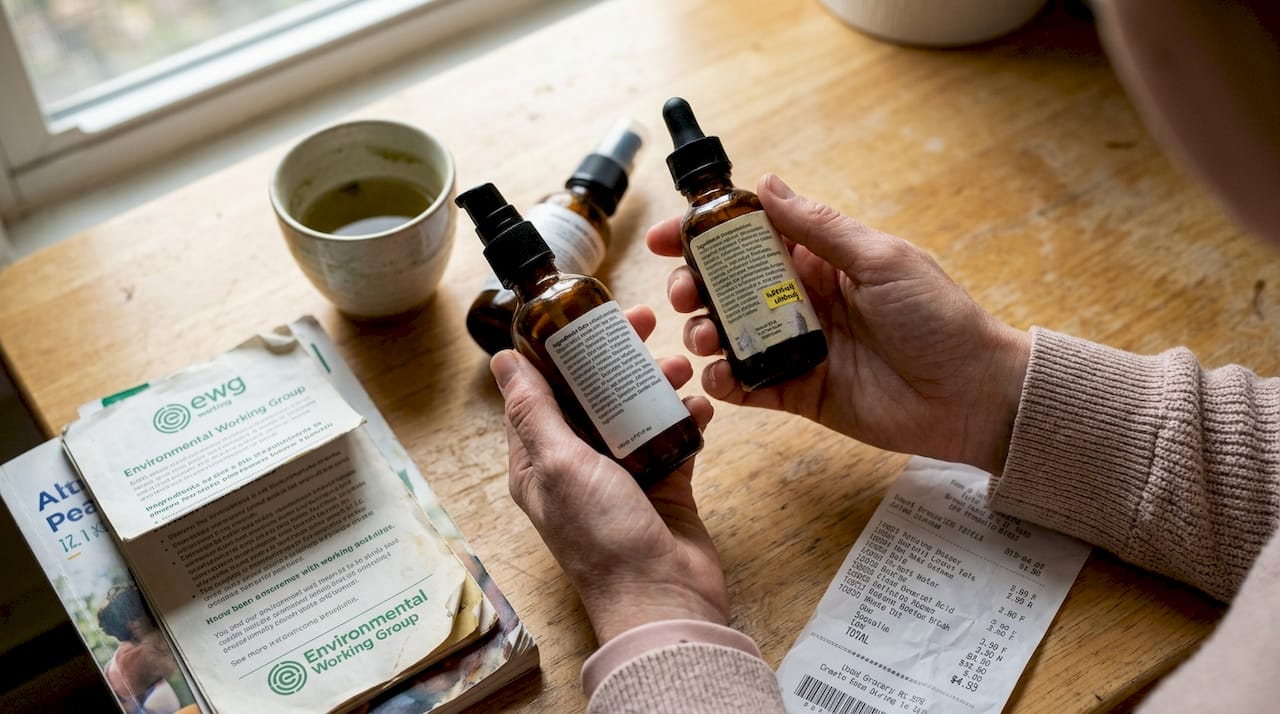
Certifications provide shortcuts for verifying claims. EWG Verified indicates products meet strict ingredient standards. Leaping Bunny confirms no animal testing occurred during development or production. The Vegan Society logo guarantees no animal-derived ingredients. Each certification addresses specific concerns, so multiple logos often appear on truly clean products.
| Certification | What It Verifies | Limitation |
|---|---|---|
| EWG Verified | Ingredient safety standards | Conservative ratings may exclude safe synthetics |
| Leaping Bunny | Cruelty-free testing | Doesn’t address ingredient sourcing |
| Vegan Society | No animal-derived ingredients | Doesn’t guarantee natural or organic |
| USDA Organic | Organic ingredient percentage | Allows some synthetic preservatives |
Create a personal checklist of qualities you want in your products. Consider factors beyond ingredients: packaging sustainability, brand ethics, product shelf life, and price point. Your priorities might differ from someone else’s, and that’s perfectly fine. Clean beauty is personal, not one size fits all.
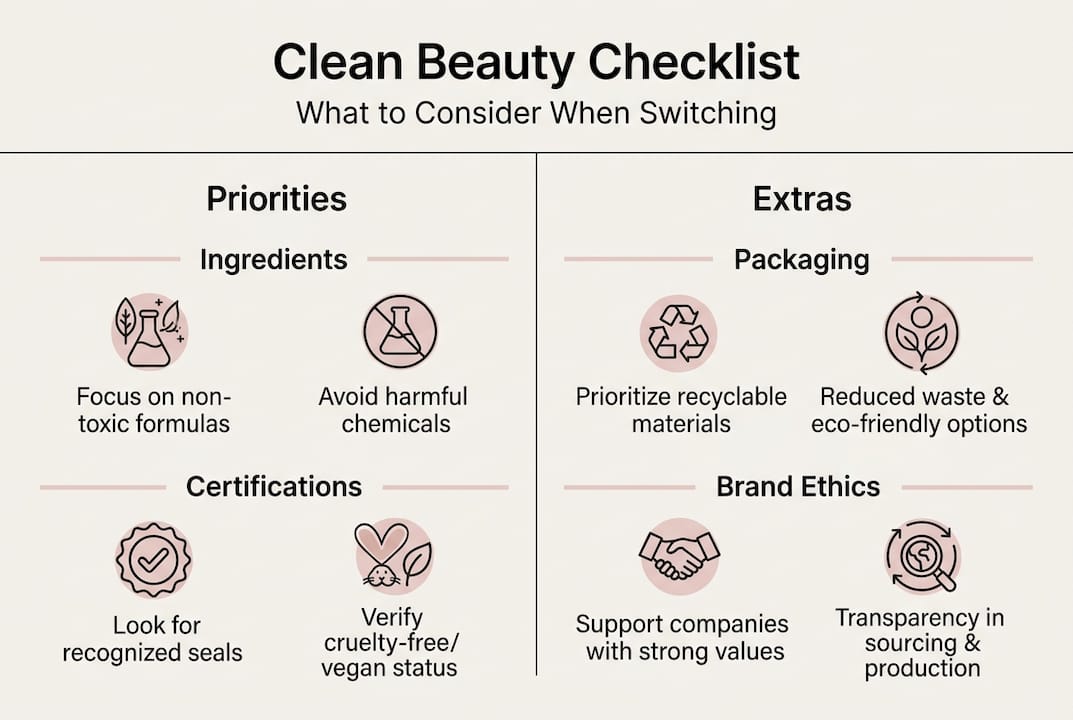
Environmental impact deserves attention too. Some brands use natural ingredients but package them in excessive plastic. Others prioritize refillable containers and carbon-neutral shipping. Ethical standards extend beyond what goes on your skin to how products reach you and what happens after you finish them.
Pro Tip: Start a spreadsheet or note on your phone listing ingredients you want to avoid and certifications you trust, then reference it while shopping to speed up decision making and avoid analysis paralysis.
The sensitive skin cleansers you choose should align with your ingredient preferences while addressing your specific skin concerns. Gentle formulations work for most people starting their clean beauty journey, especially if you’re unsure how your skin will react to new products.
Understanding the ingredient safety guide helps you distinguish between genuinely problematic components and those flagged unnecessarily. Some ingredients sound scary but pose minimal risk at cosmetic concentrations. Context matters as much as the ingredient itself.
Switching your routine: step-by-step guide to adopting clean beauty products
Your cleanser should be the first product you replace. It touches your skin daily and rinses away, making it lower risk for adverse reactions compared to leave-on products. Choose something gentle and natural that removes dirt without stripping your skin’s protective barrier. Oil-based or milk cleansers work well for most skin types during this transition.
Gradually transition your moisturizer and serums next. Preservative-free regimens may support skin microbiome stability while improving wrinkles and redness better than products containing preservatives. However, preservative-free items have shorter shelf lives and require more careful storage. Balance these benefits against practical considerations.
Follow this replacement order for smoothest results:
- Replace your cleanser with a gentle, natural formula
- Switch your moisturizer after two weeks of using the new cleanser
- Introduce a clean serum or treatment product one at a time
- Update your eye cream and specialty products last
- Replace sunscreen only after other products feel stable
Double cleansing enhances your routine’s effectiveness, especially if you wear makeup or sunscreen. The double cleansing technique uses an oil-based cleanser first to dissolve makeup and sebum, followed by a water-based cleanser to remove remaining impurities. This method works particularly well with natural products that might be gentler but less aggressive than conventional formulas.
Watch your skin’s response carefully during the transition. Some temporary changes are normal as your skin adjusts to new ingredients and the absence of synthetic fragrances or silicones. Genuine irritation looks different from adjustment: persistent redness, burning, or worsening texture signals a problem rather than adaptation.
Avoid switching everything simultaneously. Introducing multiple new products at once makes it impossible to identify which one causes problems if your skin reacts poorly. Space new additions at least one to two weeks apart, giving your skin time to adjust and you time to observe changes.
Pro Tip: Take photos of your bare skin in natural light before starting your transition and then weekly afterward to track subtle changes you might not notice day to day.
Pay attention to product shelf life, especially with preservative-free formulations. Natural products often last six to twelve months after opening compared to two to three years for conventional products. Mark opening dates on containers and watch for changes in smell, texture, or color that indicate spoilage.
The preservative-free skincare study demonstrates measurable benefits, but these products require more diligent usage habits. Store them properly, use clean hands or spatulas for application, and replace them promptly when they expire.
Verifying results and adjusting your clean beauty approach
Tracking changes in your skin helps you evaluate whether your new routine works. Monitor texture, hydration levels, redness, and any breakouts over several weeks. Keep notes on what you observe, as memory alone often fails to capture gradual improvements or declines.
Expect gradual improvement rather than overnight transformation. Visible results often begin around four weeks after consistently using clean beauty products. Skin barrier function and hydration improve over several months as your skin adapts to gentler, more nourishing ingredients. Patience becomes essential during this period.
Key indicators to track:
- Skin texture becoming smoother or rougher
- Hydration levels throughout the day
- Frequency and severity of breakouts
- Redness or inflammation changes
- Fine lines and overall radiance
- Oil production patterns
Identifying signs of irritation versus positive adaptation prevents unnecessary product changes. Mild tingling that subsides quickly often indicates active ingredients working. Persistent burning, itching, or worsening texture signals genuine irritation requiring immediate product discontinuation. Learn to distinguish between the two.
Adjust your routine if problems worsen rather than improve. Not every natural product suits every person, and clean beauty doesn’t guarantee compatibility with your unique skin chemistry. Be willing to swap products or return to previous steps if something clearly isn’t working.
Clinical studies show natural ingredients can reduce sebum by 21% and improve skin barrier function and hydration. These measurable benefits demonstrate that clean beauty products deliver real results when formulated properly. The research validates what many users experience anecdotally.
| Timeframe | Expected Changes | Action Needed |
|---|---|---|
| Week 1-2 | Possible purging or adjustment period | Monitor closely but don’t panic |
| Week 3-4 | Initial improvements in texture and hydration | Continue routine consistently |
| Week 5-8 | Noticeable reduction in issues like oiliness | Fine-tune products if needed |
| Month 3+ | Sustained improvements in barrier function | Maintain routine for lasting results |
Benefits accumulate over time. Improved barrier function means better moisture retention and resilience against environmental stressors. Reduced oiliness indicates balanced sebum production rather than the rebound effect common with harsh conventional products. These changes build on each other.
Maintain consistency for lasting results. Switching products constantly prevents you from accurately assessing what works. Give each product at least four to six weeks unless you experience obvious irritation. The organic skincare benefits compound when you stick with effective formulations long enough to see their full potential.
The clinical natural skincare research provides evidence-based support for continuing your clean beauty journey. Real data backs up the improvements you’re working toward, making the transition process feel less like a leap of faith.
Explore natural skincare products for your clean beauty journey
Transitioning to clean beauty becomes simpler when you have trusted products to guide your journey. Madam Seta offers a thoughtfully curated line of natural, vegan, and cruelty-free skincare designed specifically for women making this important switch. Every formula contains at least 95% natural ingredients, free from parabens, sulfates, and synthetic fragrances that compromise skin health.

Their collection includes gentle cleansers perfect for starting your transition, hydrating serums that support your skin barrier, and effective moisturizers that deliver results without harsh chemicals. The natural face creams provide deep nourishment while respecting your skin’s natural balance. For those concerned about aging, specialized skincare for mature skin addresses fine lines and firmness with plant-based actives. Start your clean beauty journey with products formulated to work with your skin, not against it.
FAQ
How long does it take to see results after switching to clean beauty?
Visible improvements often begin around four weeks after consistently using clean beauty products, though individual results vary based on skin type and specific concerns. Skin barrier function and hydration improve gradually over several months as your skin adapts to gentler formulations. Some people notice changes sooner, while others need eight to twelve weeks for significant differences to appear.
Are synthetic ingredients really unsafe compared to natural ones?
Not all synthetics are harmful; some are safe and effective as dermatologists consistently confirm through research and clinical practice. Natural ingredients can also cause irritation or allergic reactions depending on individual sensitivities. Focus on evidence-based formulations and ingredient safety data rather than simply choosing based on whether something is natural or synthetic.
How can I identify truly cruelty-free and vegan products?
Look for certifications like Leaping Bunny and Vegan Society logos, which verify that products meet strict standards for animal testing and ingredient sourcing. Read ingredient lists carefully for animal-derived components such as beeswax, lanolin, carmine, or collagen. Beware of unverified claims without third-party certifications, as brands sometimes use these terms loosely without meeting official standards. The cruelty-free product example shows what proper certification looks like.
Can I switch to clean beauty if I have sensitive skin?
Yes, starting with gentle, preservative-free cleansers often helps sensitive skin types avoid irritation from harsh chemicals and synthetic fragrances. Introduce new products slowly and patch test on a small area before full-face application to monitor reactions. Choose products specifically formulated for sensitive skin, like these sensitive skin cleansers, which use minimal ingredients and avoid common irritants.